How to Build a Simple Wellness Routine That Actually Sticks

Why consistency matters more than motivation—and how to design for it
Almost everyone starts a wellness routine feeling motivated.
They’re inspired. They’re ready to “do better.” They believe this time will be different.
And for a while, it works.
Then life shows up.
Schedules shift. Stress rises. Energy drops. Motivation fades.
That’s usually when people assume the problem is discipline.
Most of the time, it isn’t.
The real issue is that most wellness routines are built to look impressive, not to survive real life.

Why Most Wellness Routines Fail (Even Good Ones)
Most routines fail for one simple reason:
They ask too much from a system that’s already stretched.
People design routines assuming:
- perfect energy
- ideal schedules
- high motivation
- zero interruptions
Real life looks very different.
It includes stress, fatigue, bad sleep, emotional load, and unpredictable days.
A routine that only works on “good days” isn’t a routine — it’s a performance.
And performances don’t survive pressure.
The Biggest Myth About Consistency
Consistency is often framed as willpower:
“Just stay disciplined.” “Push through.” “Don’t make excuses.”
But the body doesn’t respond to moral pressure.
It responds to design.
Consistency improves when a routine:
- matches your energy
- fits your schedule
- reduces decision-making
- feels supportive instead of demanding
When routines are designed this way, consistency becomes automatic — not forced.

Why Simple Routines Work Better Than Perfect Ones
Simple routines get repeated. Perfect routines get abandoned.
A simple routine:
- removes friction
- lowers mental load
- adapts to bad days
- survives stress
Complex routines require planning, motivation, and constant adjustment.
Under stress, the brain defaults to the easiest option. If your routine isn’t easy, it gets dropped.
That’s not a flaw — it’s biology.
What a “Sticky” Routine Actually Looks Like
A routine that sticks has three traits:
1. A Clear Purpose
Not “be healthy,” but something specific:
- feel more energetic
- sleep better
- reduce stress
- support digestion
Clarity prevents overload.
2. Flexible Structure
The routine adapts to:
- low-energy days
- busy days
- high-stress days
Flexibility keeps momentum alive.
3. Built-In Recovery
No routine sticks if it drains you.
Recovery isn’t optional — it’s part of the system.

Why Motivation Isn’t the Solution
Motivation is unreliable.
It rises and falls with:
- sleep
- stress
- mood
- environment
Routines that depend on motivation collapse the moment life gets harder.
Sticky routines depend on signals, not feelings:
- time of day
- environment
- habit stacking
- predictable cues
When the cue shows up, the action follows — even on low-motivation days.
The Hidden Cost of Doing Too Much
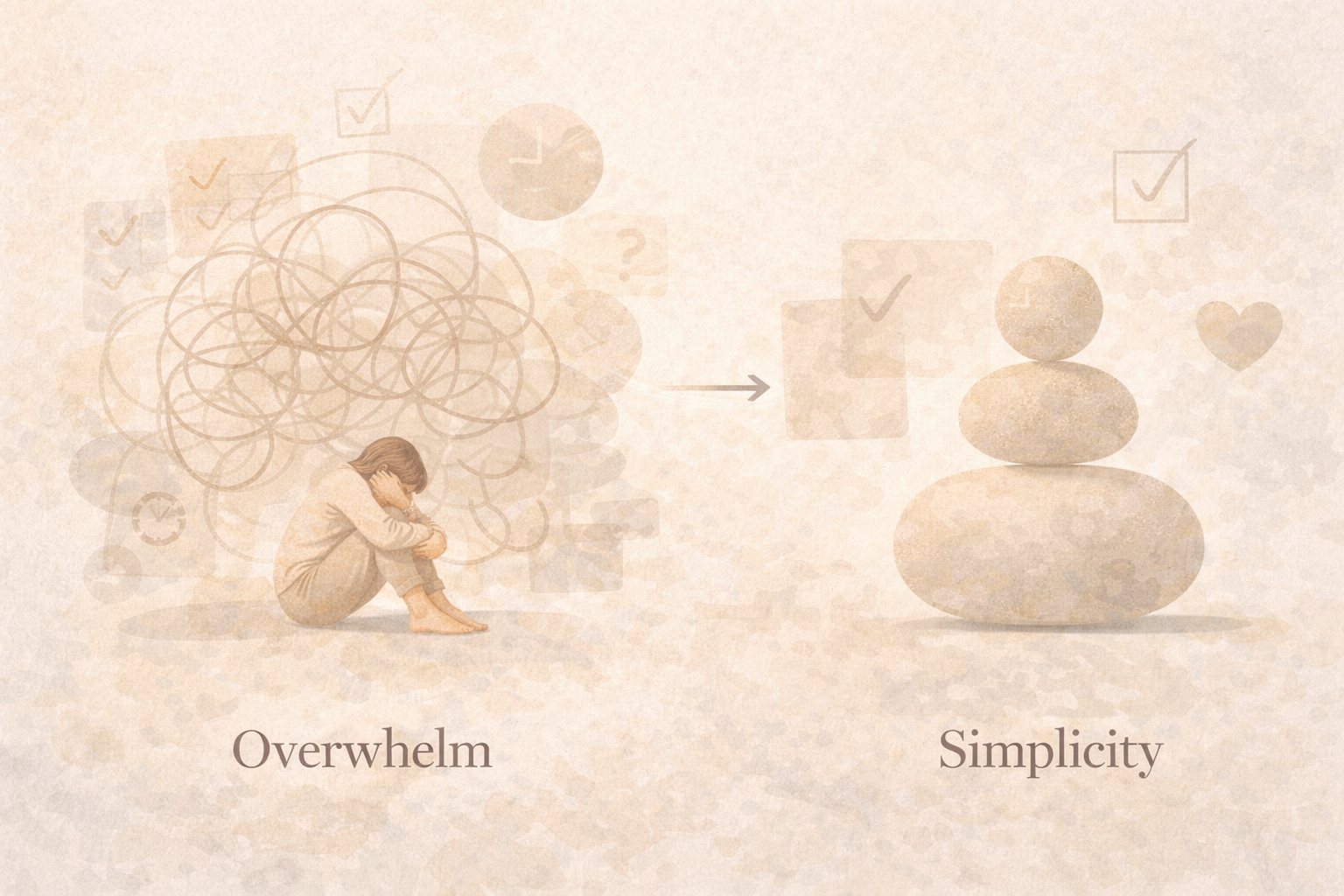
Overloaded routines create:
- decision fatigue
- guilt when skipped
- pressure to “catch up”
- eventual burnout
Burnout doesn’t mean you don’t care. It means the system wasn’t designed for sustainability.
A Better Question to Ask
Instead of asking:
“How much can I handle?”
Ask:
“What can I repeat even on a hard day?”
That single shift changes everything.
The 3-Part Framework for a Routine That Lasts
Part 1: Choose One Anchor Habit
Most people fail by choosing too many habits at once.
Instead, choose one primary anchor — the habit that sets the tone for everything else.
Examples:
- eating a real breakfast
- walking daily
- shutting screens off at night
- going to bed within a window
Your anchor should:
- happen at the same time each day
- feel manageable
- positively affect other habits
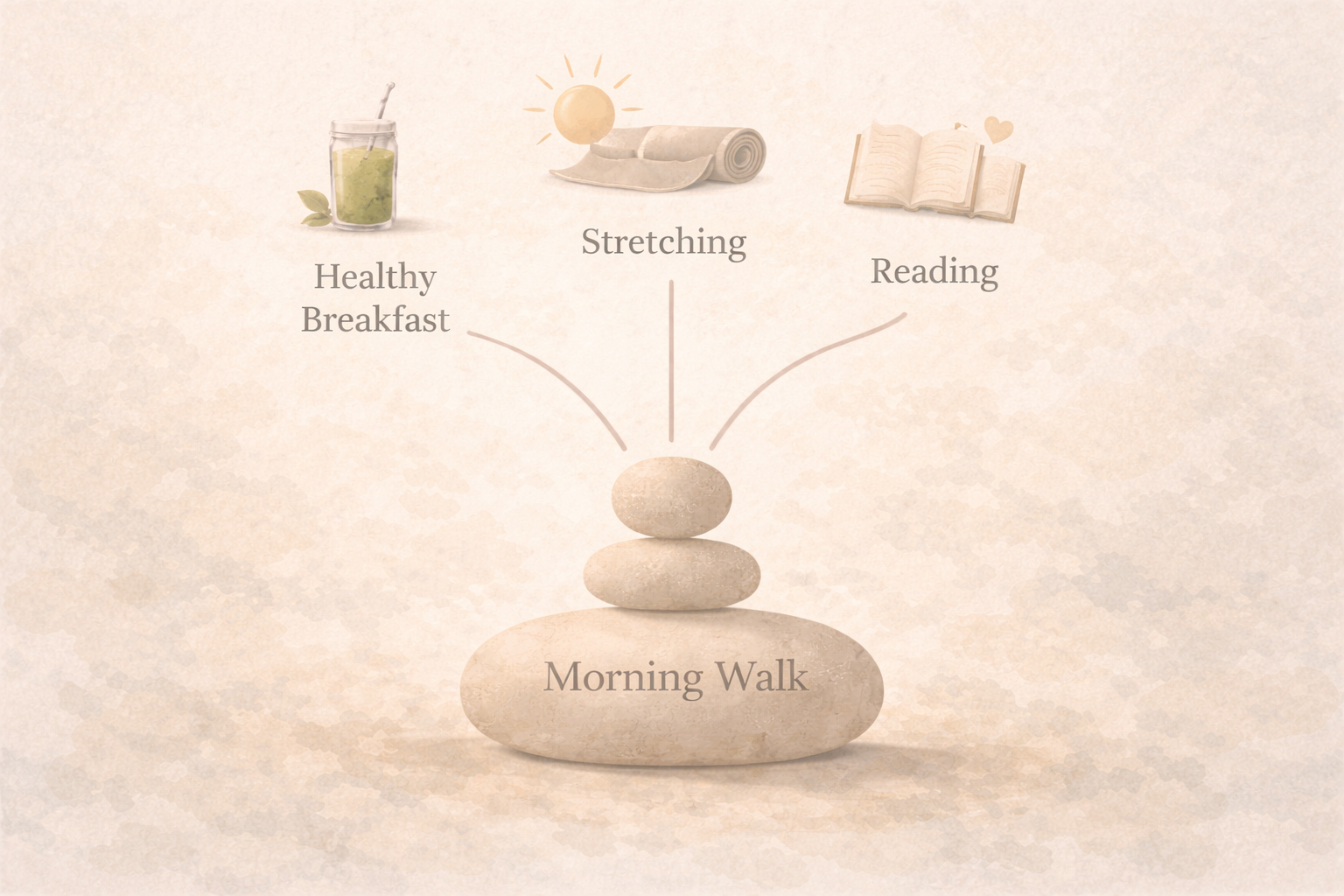
Part 2: Add Supportive Habits (Only If They Reduce Effort)
Supportive habits should make the anchor easier, not harder.
Examples:
- prepping simple meals
- laying out walking shoes
- dimming lights after dinner
If a habit adds stress, planning, or guilt — it doesn’t belong yet.
Part 3: Build in Flexibility From the Start
Define:
- a minimum version
- a normal version
- an extra version
Example:
- walk 5 minutes (minimum)
- walk 20 minutes (normal)
- walk longer if energy allows
Doing the minimum still counts.
Consistency matters more than intensity.

How to Handle Bad Days Without Quitting
Bad days will happen.
What matters isn’t how you perform on good days — it’s how your routine behaves on hard ones.
The most important rule:
Never let a bad day turn into a broken routine.
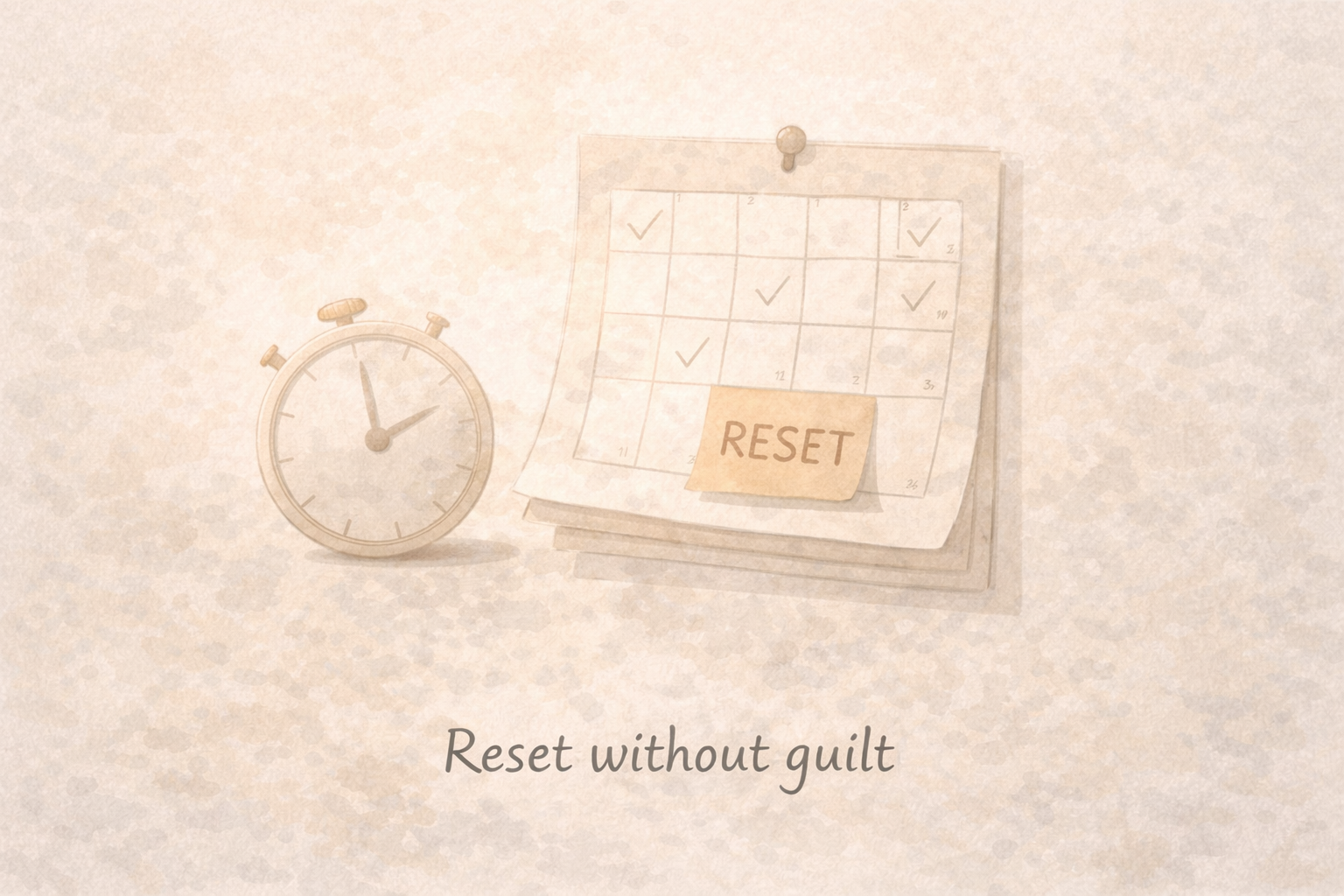
Missing a day isn’t the problem. The guilt spiral afterward is.
The correct move is simple: Return to the next scheduled habit. No apology. No overcorrection. No drama.
When a Routine Becomes Pressure
A routine stops working the moment it starts creating stress.
Warning signs:
- guilt when you skip
- anxiety about falling behind
- pressure to perform
When this happens, the solution isn’t more discipline.
It’s simplification.
Why Consistency Beats Intensity
A routine done at:
- 60% effort
- most days
beats:
- 100% effort
- followed by burnout
Sustainable progress often feels boring — and that’s a good sign.
Gentle Support That Fits a Simple Routine
When you’re building a routine meant to last, the goal isn’t to add more rules or complexity.
It’s to choose support that’s easy to repeat, even on low-energy days.
If you’re looking for something simple that fits into a calm, realistic routine, daily gummies can be a low-friction option—especially while habits are still settling.
👉 Goli Gummies
-
Easy to take consistently
-
Support everyday balance without extremes
-
No complicated schedules or stacking
They’re not meant to replace habits or force results—just to support your routine while consistency does the real work.
Final Thought
You don’t need a perfect routine.
You need one that:
- adapts
- supports you
- survives real life
That’s how wellness becomes sustainable — and how progress actually sticks.
