Why You’re Doing “Everything Right” — But Still Feel Tired, Bloated, and Off
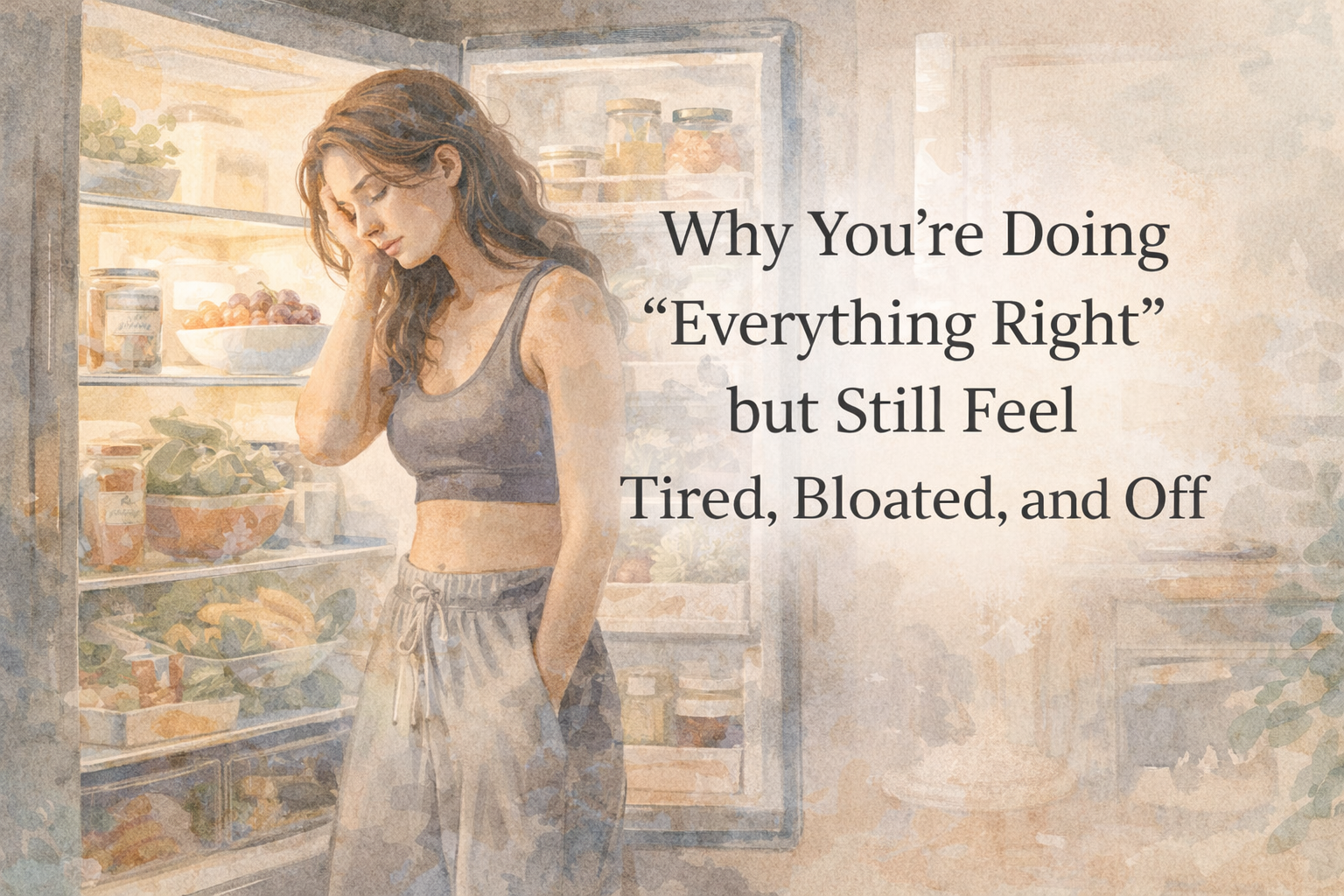
You’re not living on junk food. You’re not partying every night. You’re trying.
You eat better than you used to. You move your body. You drink water. You’ve cut back on the obvious things that made you feel worse.
And yet — you still don’t feel like yourself.
Maybe it’s the kind of tired that sleep doesn’t fix. Maybe it’s bloating that shows up even after “healthy” meals. Maybe it’s brain fog, mood swings, low motivation, or that constant sense that something is just off.
If this sounds familiar, here’s the truth most wellness advice misses:
Feeling bad while doing “everything right” is not a personal failure.
It’s usually a sign that your body needs a different kind of support — not more pressure, discipline, or restriction.

Short on time? Here’s what this post covers:
- Why “doing everything right” can still feel wrong
- The hidden systems that commonly drive fatigue and bloating
- Why generic wellness advice often backfires
- A simple 72-hour reset to stabilize your body
- How to support your system without starting over
The “Everything Right” Trap
When people say they’re doing everything right, it often looks like this:
- eating “cleaner” than before
- cutting back on sugar or processed foods
- working out more consistently
- drinking more water
- adding supplements
- trying to improve sleep
All of that is positive.
The trap is assuming these behaviors automatically create a regulated, resilient body.
You can eat well and still:
- crash in the afternoon
- bloat after meals
- wake up unrefreshed
- feel wired but exhausted
- rely on caffeine just to function
That doesn’t mean your habits are useless. It usually means your foundation is unstable.
Think of wellness like building a house. Healthy habits are the visible walls. But if the foundation is uneven — stress, recovery debt, digestion overload, blood sugar swings — everything feels shaky no matter how good it looks.
What “Tired, Bloated, and Off” Usually Points To
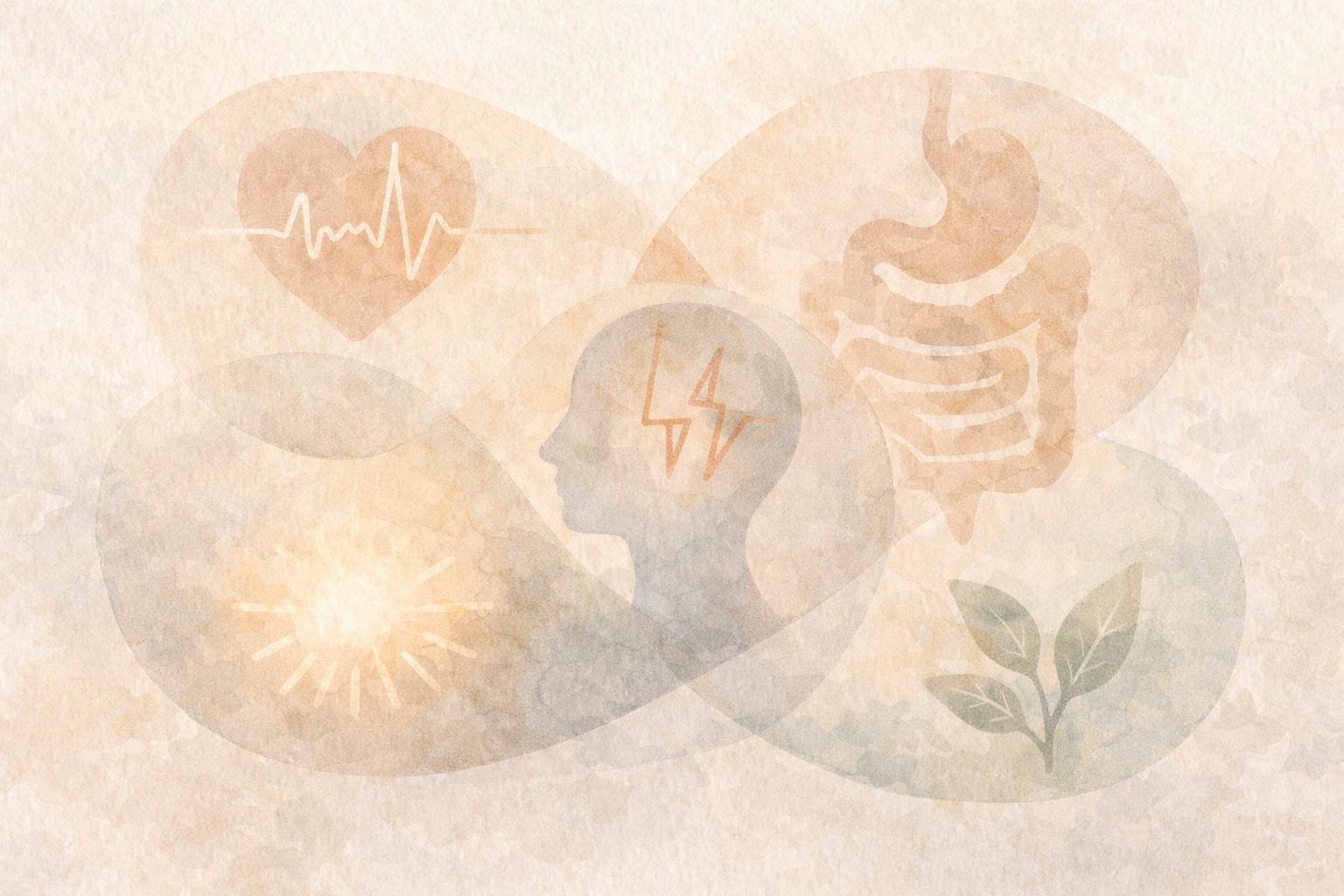
These symptoms feel vague, but they often trace back to a few core systems being out of sync.
The goal here isn’t diagnosis. It’s pattern recognition — so you stop guessing and start supporting the right lever.
1. Blood Sugar Instability (Even If Your Labs Are “Fine”)
Blood sugar issues aren’t just a diabetes problem. They’re a modern lifestyle problem.
Common contributors:
- coffee before food
- light or skipped breakfasts
- long gaps between meals
- meals low in protein or total fuel
Signs this may be happening:
- shakiness or anxiety when hungry
- mid-afternoon crashes
- evening sugar cravings
- brain fog when meals are delayed
Repeated dips force your body to rely on stress hormones — which affects digestion, sleep, and mood.
2. Digestive Slowdown or Overload
Bloating doesn’t automatically mean your gut is “damaged.”
Often it means digestion is overwhelmed, rushed, or happening in a stressed state.
Common clues:
- bloating after meals (especially later in the day)
- feeling overly full or heavy
- irregular bowel movements
- gas, pressure, or frequent burping
- food that feels like it “sits”
Stress, eating speed, carbonation, fiber overload, and certain food combinations can all pile on.
3. Chronic Stress Signaling
You can feel mentally okay and still run a stressed physiology.
Clues include:
- wired but exhausted
- light or broken sleep
- waking between 2–4 a.m.
- jaw clenching or muscle tension
- needing caffeine to feel normal
When stress stays elevated, digestion and recovery suffer.
4. Recovery Debt
If life demands and training outpace recovery, the body starts to feel inflamed.
Signs:
- workouts leave you drained instead of better
- soreness lingers longer
- progress stalls
- puffiness or achiness shows up
- sleep quality dips when training increases
More effort doesn’t fix this. Better recovery does.
5. Basic Fueling Gaps
Even people who eat “healthy” often under-eat protein or total calories.
Common signs:
- hungry again soon after meals
- constant snacking without satisfaction
- intense cravings
- low motivation
- brief energy bumps that fade quickly
None of this means you’re broken. It means your body needs support, not discipline.
Why Generic Wellness Advice Often Backfires
Most wellness advice is written for an imaginary person with:
- low stress
- perfect sleep
- resilient digestion
- stable hormones
- unlimited time
That’s not real life.
Why common advice can make things worse:
- “Just eat salads and smoothies.” Raw, high-volume meals can increase bloating under stress.
- “Cut carbs.” Often worsens fatigue and cravings when stress is high.
- “Work out harder.” Raises stress hormones and disrupts sleep when recovery is behind.
- “Take more supplements.” Random stacking irritates digestion and adds confusion.
- “Just be consistent.” Consistently doing the wrong thing locks in the wrong result.
The issue isn’t effort. It’s misalignment.
A Simple 72-Hour Reset (No Starting Over)
Before fixing everything, stabilize your system.
For the next three days:
- Eat three regular meals (don’t skip)
- Anchor meals with protein + fiber + healthy fats
- Include carbs in amounts that suit your activity
- Choose warm, simple foods
- Reduce high-intensity workouts
- Walk 10 minutes after one meal daily
- Go to bed slightly earlier than usual
This isn’t a detox. It’s a reset of inputs.
Most people notice at least one improvement:
- less bloating
- steadier energy
- calmer cravings
- improved sleep
That change is information.

The 3 Foundations That Help Almost Everyone
1. Support Before Discipline
If your body feels off, pushing harder usually backfires.
Support looks like:
- steadier meals
- easier digestion
- gentler movement
- better sleep
2. Consistency Beats Intensity
You don’t need perfect routines.
You need habits that:
- work on low-energy days
- don’t rely on motivation
- adapt to stress
Minimum effort still counts.
3. Calm Changes Everything
When your nervous system settles:
- digestion improves
- energy stabilizes
- recovery improves
- focus returns
This is often the missing piece.

A Gentle Support Option (No Pressure)
If stress, poor sleep, or constant tension are part of what’s keeping you stuck, calming support can help while you stabilize.
Two simple options many people tolerate well:
Goli Ashwagandha Gummies — to support stress balance
Goli Dreamy Sleep Gummies — to support relaxation, sleep, and recovery
They’re easy to take and fit well into a stabilization phase without adding complexity.
👉 You can explore them here if you want gentle support while your routine stabilizes.
The Bottom Line
If you’re doing “everything right” and still feel off, it doesn’t mean you need more discipline.
It usually means your body needs:
- steadier support
- less pressure
- a routine designed for real life
You don’t need to start over.
You just need to adjust.
